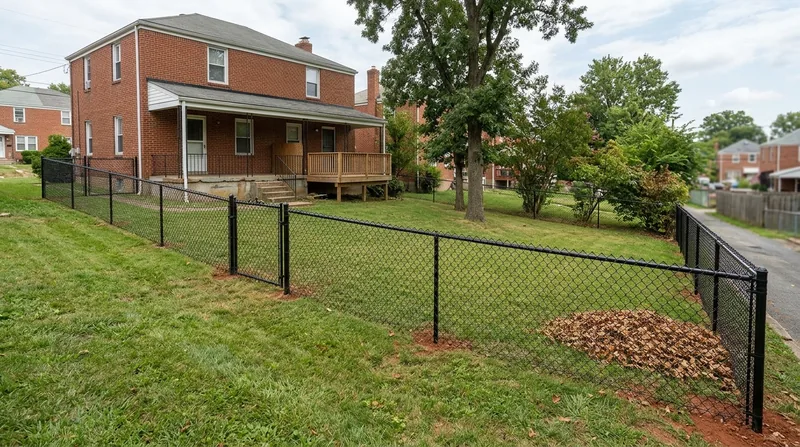




Chain link fence installation in Washington means building a fence that holds up to the freeze-thaw cycles, saturated red clay, and summer humidity that dominate the District. Whether you're securing a side lot in Capitol Hill, running a perimeter around a commercial property in Petworth, or fencing a narrow backyard in Bloomingdale, galvanized and black vinyl-coated chain link delivers the toughest fence per dollar when it's installed with the right gauge mesh, proper tensioning, and braced corners that stay tight on clay. Washington's dense historic rowhouses, detached Colonials on deep wooded lots, and postwar brick duplexes all rely on chain link for side and rear boundaries where privacy fences would cost twice as much. We install chain link that resists rust, stays plumb on uneven terrain, and lasts decades with minimal upkeep. Call (771) 246-2846 for a free estimate, or read on to understand what makes chain link the practical choice for Washington yards and commercial lots.
Why Chain Link Fence Installation Matters in Washington's Dense Urban and Suburban Landscape
Washington's residential fabric ranges from narrow-lot Victorian rowhouses with rear alley access to large detached homes on wooded slopes east and west of the Anacostia River. Chain link fence solves the boundary problem on tight side lots and commercial perimeters where the cost of wood privacy fencing or vinyl is prohibitive. The freeze-thaw cycles that heave posts out of ground each winter, the wet red clay that rots untreated wood at the ground line, and the occasional heavy wet snow or summer thunderstorm debris make chain link the lowest-maintenance option for yards that need containment without the upkeep. Properly tensioned mesh and galvanized or powder-coated steel resist corrosion in humid summers and road salt spray along front yards. Chain link also pairs well with privacy slats or windscreen fabric if you need visual screening without the cost of a full privacy fence.
- Galvanized steel mesh resists rust and corrosion in Washington's humid summers and wet winters without painting or staining.
- Black vinyl-coated chain link provides a finished appearance and longer life than bare galvanized wire in high-traffic or commercial settings.
- Proper gauge (11 or 9 gauge for residential, 6 gauge for commercial) and tension bands keep mesh tight even as clay shifts and freezes.
- Anti-sag bracing on corners and gates prevents sagging and keeps the fence plumb on uneven terrain common in Washington neighborhoods.
- Installation on clay requires posts set deep in concrete, not just tamped earth, to resist heaving and stay secure through winter cycles.
Chain link installed to spec holds its line and requires no annual maintenance, making it the practical choice for Washington yards and commercial lots where durability and cost matter.
Key info: Washington's freeze-thaw winters heave posts out of ground each spring if they're not set deep in concrete and spaced properly. We set posts 3 feet deep on 6-foot centers, with concrete collars extending 6 inches above grade to shed water away from the post base. That's why chain link installed on clay lasts 25 to 30 years instead of failing after 8 to 10.
For more detail on how freeze-thaw and clay affect fence longevity, see our guide to fence post repair and replacement in Washington.
How We Install Chain Link Fence on Washington's Clay and Uneven Terrain
Chain link installation on Washington's dense red clay and gently rolling terrain requires precision at every step. We start with a site walk to locate utilities (required by DC law via 811 locates), check property lines against your existing survey, and identify drainage patterns and tree roots that affect post placement. We then mark post locations, dig holes 3 feet deep on 6-foot centers, set posts in concrete, and install stretcher bars and tension bands to pull mesh tight. For gates and corners, we add anti-sag bracing to prevent sagging as the fence ages. If you need privacy screening, we install slats or windscreen fabric into the mesh after tensioning. The entire process takes 2 to 5 days depending on fence length, terrain, and whether we're adding gates or specialty hardware.
- We call for a DC 811 utility locate before we dig any post holes to avoid striking water, sewer, electric, or gas lines.
- We mark the fence line with chalk and verify it against your existing property survey and deed before we set a single post.
- We dig post holes 3 feet deep on 6-foot centers and set each post in a concrete collar that extends 6 inches above grade to shed water.
- We install galvanized or black vinyl-coated mesh with stretcher bars and tension bands, pulling the mesh tight with a ratchet to eliminate sag.
- We add anti-sag bracing on all corners and gate frames to keep the fence plumb and prevent sagging as the fence ages on clay.
- For privacy, we install slats or windscreen fabric into the mesh after tensioning, or recommend a full privacy fence if you need complete visual blocking.
This methodical approach ensures your chain link fence stays tight and plumb through Washington's freeze-thaw cycles and clay movement.
Local example: A Capitol Hill rowhouse with a 40-foot rear alley fence on clay: we dug 7 post holes 3 feet deep, set each in concrete, installed 11-gauge galvanized mesh with tension bands, and added anti-sag bracing on the alley gate. The entire job took 3 days. The fence has been tight and plumb for 6 years with zero maintenance.
For details on gate installation and automatic driveway gates, see gate installation and repair in Washington.
| Approach | Description | Best for |
|---|---|---|
| Galvanized Steel Mesh | Hot-dipped galvanized wire resists rust and corrosion without paint or coating. Standard choice for residential and light commercial use. | Washington yards, side lots, and residential perimeters where cost and durability are priorities. |
| Black Vinyl-Coated Mesh | Galvanized wire wrapped in PVC coating for a finished look and extended corrosion resistance. More aesthetic and longer-lasting in high-traffic areas. | Commercial properties, front-yard fencing, and properties where appearance matters alongside durability. |
| Chain Link with Privacy Slats | Vinyl or aluminum slats woven into the mesh to block line-of-sight while maintaining airflow. Lighter and cheaper than a full privacy fence. | Narrow side yards, alley fences, and properties where you want privacy without the cost and maintenance of wood or vinyl privacy fencing. |
| Commercial-Grade Chain Link | 6-gauge or heavier mesh with reinforced posts, industrial-strength hardware, and anti-climb features. Designed for high-traffic and security applications. | Commercial lots, storage yards, and properties requiring security fencing or withstanding heavy impact and wear. |
Chain Link Fence Installation Cost in Washington: What to Expect
Chain link fence installation in Washington starts at $16 per linear foot for standard galvanized mesh on residential lots with clear access and moderate terrain. That baseline covers 11-gauge galvanized wire, posts set 3 feet deep in concrete, and stretcher bars and tension bands properly installed. The price moves up with site conditions: steep or heavily rooted lots, limited access for equipment, black vinyl-coated mesh instead of galvanized, privacy slats, gates, and commercial-grade 6-gauge mesh all add cost. A 100-foot residential fence on a flat, clear lot runs $1,600 to $2,000. A 200-foot commercial perimeter with gates and anti-sag bracing on uneven terrain can run $4,000 to $6,000. The best way to know your cost is to review our full pricing guide and then call for a free on-site estimate at (771) 246-2846. We respond within 24 hours and can walk you through the factors that affect your specific job.
Getting 2 to 3 estimates is smart practice. Each contractor will assess site conditions differently, and you'll see where the market sits. We also recommend asking whether a fence can be repaired instead of replaced. If your existing chain link has a few torn sections or a sagging gate, fence repair often costs less than half of a full replacement and buys you 5 to 10 more years of service.
What to Look for When Hiring a Chain Link Fence Contractor Near Washington
Choosing the right fence contractor near Washington means checking insurance, understanding the permit rules that apply to your property, and getting clear answers about what's included in the estimate. Ask any contractor you call whether they carry general liability and workers' compensation insurance. Request a certificate of insurance before work starts. In Washington, fence licensing and permitting rules vary by jurisdiction. Some neighborhoods and HOAs require permits for any fence; others don't. Some communities have height, setback, or material restrictions that apply even to chain link. We recommend checking with your local building department or HOA before you request an estimate, so you know what's allowed. Ask your contractor to walk you through permit requirements for your specific address. Get multiple estimates in writing, with a breakdown of materials, labor, and timeline. Ask for references from recent jobs in your neighborhood. Call us at (771) 246-2846 for a free estimate, and we'll answer your permit questions and walk you through what makes sense for your property.
- Verify that the contractor carries general liability and workers' compensation insurance, and ask for a certificate of insurance before work begins.
- Ask your local building department or HOA whether a permit is required for chain link fence installation at your address.
- Confirm that the contractor will call for a DC 811 utility locate before digging any post holes to avoid striking underground utilities.
- Get a written estimate that breaks down materials, labor, post spacing, gauge, and timeline so you can compare apples to apples with other bids.
- Ask for references from recent jobs in your neighborhood, especially if your lot has clay, trees, or steep terrain.
- Discuss whether repair or replacement makes more sense if you have an existing fence that's sagging or damaged.
A good contractor will answer your questions honestly and propose repair before replacement whenever it makes financial sense. Contact us today for a free estimate and honest guidance on what's right for your property.
Chain Link Fence Installation in Washington: Pricing Guide
| Service | Price | Details |
|---|---|---|
| Residential chain link, galvanized mesh, 11-gauge | Starting at $16/ft | Posts set 3 feet deep in concrete, stretcher bars, tension bands, standard 6-foot centers on clear, moderate terrain |
| Black vinyl-coated chain link mesh, residential or commercial | Starting at $20/ft | Same installation as galvanized, plus durable PVC coating for finished appearance and extended corrosion resistance in high-traffic areas |
| Chain link with privacy slats or windscreen fabric | Starting at $22/ft | Vinyl or aluminum slats woven into mesh after tensioning for visual screening without full privacy fence cost or maintenance burden |
| Commercial-grade chain link, 6-gauge mesh, gates, anti-sag bracing | On estimate | Heavier gauge, reinforced posts, industrial hardware, and site-specific factors like terrain, access, and security requirements require on-site assessment |
| Travel and site assessment | Included | No separate mileage fee or travel charge within Washington and surrounding areas; included in estimate and final invoice |
| Free estimate | Free | Response within 24 hours at (771) 246-2846, no obligation to book, includes site walk and written proposal with materials and timeline |
Indicative pricing, the exact cost depends on square footage, finish, and site access. Free personalized estimate within 24h at (771) 246-2846.


