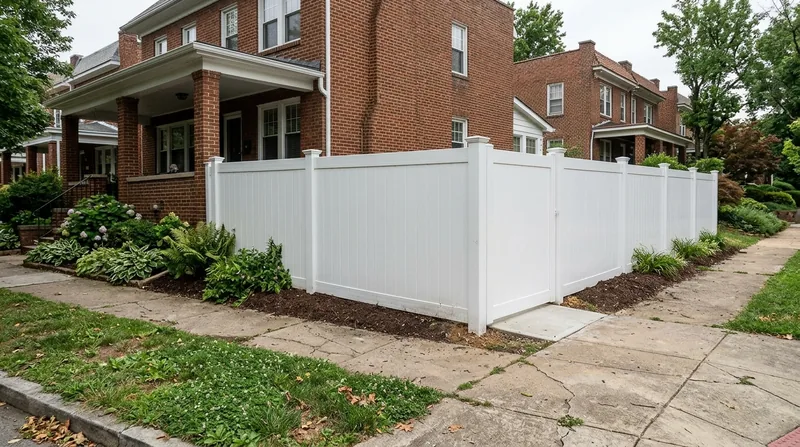




Vinyl fence installation in Washington offers a practical solution for homeowners managing the capital's dense rowhouse neighborhoods, steep wooded lots, and the freeze-thaw winters that heave wooden posts and rot them at the ground line. Washington's humid summers, heavy clay soils, and seasonal swings from wet winters to dry spells make vinyl and PVC panels attractive alternatives to cedar and pressure-treated pine, which warp and fail faster here than in drier climates. Whether you need a privacy fence along a rear alley in Capitol Hill or Petworth, a picket fence in front of a Chevy Chase Colonial, or a ranch-rail fence on a wooded lot in Cleveland Park, vinyl delivers low maintenance without the seasonal warping and rot that plague wood in this environment. We install manufacturer-backed vinyl panels with correct post spacing, concrete-set footings, and honest guidance on where vinyl outperforms wood and where it doesn't. Call (771) 246-2846 for a free estimate, or learn more about our wood privacy fence installation if you're still weighing your options.
Why Vinyl Fencing Makes Sense in Washington's Climate
Washington's weather pattern is the core reason vinyl outperforms wood here. The region experiences hard freeze-thaw cycles in winter, with temperatures swinging above and below 32 degrees Fahrenheit repeatedly, which heaves wooden posts and cracks them at the base. Summer humidity and afternoon thunderstorms saturate the dense red clay that blankets most residential lots, rotting wooden posts at the ground line within 10 to 15 years even when treated with pressure preservation. Vinyl panels don't absorb water, don't rot, and don't warp in response to humidity swings the way wood does. A properly installed vinyl fence on concrete-set posts with correct spacing stands straight through decades of Washington weather without the seasonal maintenance, staining, or replacement cycles that wood demands.
- Vinyl panels resist the freeze-thaw heaving that lifts wooden posts out of the ground each winter.
- No water absorption means no rot at the ground line, the dominant failure point in Washington's saturated clay.
- Vinyl does not warp, cup, or splinter in response to Washington's humid summers and dry winters.
- Vinyl fencing requires no staining, sealing, or annual maintenance to remain functional and attractive.
- Manufacturer warranties on vinyl panels typically cover 20 to 30 years, with many installations lasting longer in residential service.
These advantages make vinyl the practical choice for Washington homeowners who want a fence that shrugs off the capital's weather without becoming a recurring project.
Key info: Washington's clay soils and winter freeze-thaw cycles are particularly hard on wooden fence posts set in tamped earth. Posts set in concrete fare better, but vinyl panels eliminate the problem altogether. A vinyl fence installed on concrete-set posts in Bloomingdale or Takoma will stand straight and functional 20 years from now with no staining, sealing, or post replacement.
For more detail on how wood and vinyl compare over time, see our fence staining and restoration service, which addresses the long-term maintenance wood requires.
How We Install Vinyl and PVC Fencing in Washington
Vinyl fence quality depends entirely on correct post spacing, solid concrete footings, and proper panel alignment. We start every job with a site walk to identify utility lines, property boundaries, and terrain challenges like the steep slopes common in Anacostia or Hillcrest. We call for a DC 811 utility locate before digging any post holes, as required by law, and we verify setback and height rules with the building department for your neighborhood, because rules vary across Washington. We then set posts in concrete at manufacturer-specified spacing (typically 6 feet on center for privacy panels), ensuring each post is plumb and square. Panels slide onto post sleeves or rail systems, and we cap and trim the top to shed water and protect the post from weather. The result is a fence that doesn't sag, doesn't shift, and stays straight through Washington's winters.
- We obtain a utility locate from DC 811 before digging, as required by law.
- We verify setback, height, and material rules with your local building department.
- We set every post in concrete at the depth and spacing the manufacturer specifies.
- We check each post for plumb and square before sliding panels into place.
- We cap all posts and trim panel edges to prevent water entry and weather damage.
- We install self-closing hardware on any gates to ensure they don't swing open or bang.
Proper installation is what separates a vinyl fence that lasts 25 years from one that starts sagging and leaning within five.
Real example: A rowhouse in Shaw with a rear alley gate and a 6-foot vinyl privacy fence along the property line came to us after the previous installer had set posts in tamped earth and spaced them 8 feet apart. The panels were sagging and pulling away from the posts after three winters. We reset the posts in concrete at 6 feet on center, installed new panels, and added a self-closing hinge on the gate. The fence is now straight and secure, and the homeowner hasn't thought about it since.
For additional information on gate installation and self-closing hardware, see our gate installation and repair service.
Vinyl Fencing Styles and Installation Methods
| Vinyl Fence Style | Description | Best for Washington Homes |
|---|---|---|
| Privacy Panels | Solid vinyl boards, typically 6 feet tall, with no gaps between pickets. | Rear alley fences in Capitol Hill, Shaw, and Petworth rowhouse neighborhoods; screening from adjacent properties on narrow lots. |
| Picket Fencing | Spaced pickets on horizontal rails, typically 3 to 4 feet tall, with visible gaps. | Front yards of detached houses in Chevy Chase, Cleveland Park, and Spring Valley; maintaining sight lines while defining property edge. |
| Ranch Rail | Two or three horizontal vinyl rails between posts, no pickets, open appearance. | Wooded lots in the Palisades and Brightwood; defining boundaries without blocking views or creating wind resistance. |
| Semi-Privacy Panels | Pickets with small gaps between them, balancing privacy and sight line. | Side yards and alley fences where complete privacy is desired but some visual relief is preferred. |
Each style is installed using the same concrete-set post method, but the panel width and spacing are tailored to the style and the site. Privacy panels are typically 6 feet wide and installed side-by-side with no gaps. Picket fencing allows for varied spacing between pickets depending on the look you want. Ranch rail uses fewer materials and is lighter, making it suitable for steep terrain where a full privacy panel would create excessive wind loading.
Vinyl and PVC Fence Installation Cost in Washington: What to Expect
Vinyl fence installation in Washington starts at $38 per linear foot for a basic privacy panel installation on level ground with straightforward post spacing and no obstacles. The actual price depends on several concrete factors. Terrain matters: a steep slope in Hillcrest or Anacostia requires racked or stepped installation, which takes more time and labor than level ground. Existing trees or structures close to the fence line limit access and may require hand digging instead of power equipment. Panel height and style affect material cost; a 6-foot privacy panel costs more per foot than a 3-foot picket fence. Gate openings and self-closing hardware add to the total. Utility locates, setback verification, and building permits (where required in your neighborhood) are included in our estimate but factor into the overall project scope.
The best way to understand what your fence will cost is to get a site estimate from us and one or two other local contractors. An estimate walk takes 15 minutes, and we'll give you a firm price for your specific lot, terrain, and style. We offer free estimates with no obligation to book. Call (771) 246-2846 or visit our pricing page for a full breakdown of what different fence types cost in Washington.
Key info: A 100-linear-foot vinyl privacy fence on level ground in a Capitol Hill rowhouse backyard will cost roughly $3,800 to $4,200. The same fence on a 1-in-3 slope in a Palisades lot will cost 15 to 20 percent more because the installation is racked to follow the grade. A gate opening adds $400 to $600 depending on whether you choose a manual latch or a self-closing hinge.
Vinyl & PVC Fence Installation Near Me: What Washington Homeowners Should Know When Hiring
Hiring a fence contractor for vinyl installation in Washington means verifying a few concrete things before you sign. First, confirm that the contractor carries general liability and workers' compensation insurance. Ask for a certificate of insurance; a reputable contractor will provide it without hesitation. Fence work in Washington is not universally licensed at the state level, so licensing rules vary by jurisdiction. Your local building department can tell you whether a permit is required and whether a licensed general contractor is mandated above a certain project cost. We recommend getting two or three estimates from different contractors so you can compare pricing, installation methods, and the detail they provide in writing. Ask each contractor how they handle setback verification, utility locates, and whether they obtain permits or leave that to you. Check references, especially from recent jobs in your neighborhood; a fence that worked in Takoma will work in Petworth, and a contractor with experience on your street knows the terrain and the rules.
- Confirm that any contractor you hire carries general liability insurance and workers' compensation coverage for their crew.
- Ask your local building department whether a permit is required for your fence and whether a licensed general contractor is mandated.
- Get written estimates from at least two contractors detailing post spacing, panel height, materials, and the total linear footage.
- Ask whether the contractor will obtain the utility locate and verify setback and height rules, or whether you are responsible.
- Check recent references from homeowners in your neighborhood or similar residential areas.
- If your property is in an HOA or historic district, verify that the fence style and height meet architectural guidelines before you contract.
A good contractor will walk your lot, answer your questions clearly, and put everything in writing before work begins.
Ready to move forward? Contact us for a free estimate, or call (771) 246-2846.
Vinyl & PVC Fence Installation in Washington: Pricing Guide
| Service | Price | Details |
|---|---|---|
| Vinyl Privacy Fence Installation | Starting at $38/ft | Solid 6-foot panels on concrete-set posts at manufacturer spacing, level ground, no gates |
| Vinyl Picket Fence Installation | Starting at $28/ft | Spaced pickets, 3 to 4 feet tall, on concrete-set posts, suitable for front yards and sight-line areas |
| Vinyl Ranch Rail Fence Installation | Starting at $18/ft | Two or three horizontal rails, open appearance, lightweight, ideal for wooded lots and steep terrain |
| Racked or Stepped Installation on Slopes | Add 15 to 20 percent | Terrain-following installation required on slopes steeper than 1-in-4; labor-intensive but necessary for proper panel alignment |
| Gate Openings and Hardware | Add $400 to $600 | Manual latch gate or self-closing hinge hardware; includes frame, hinges, and latching mechanism |
| Free Estimate | No cost or obligation | Site walk, measurements, utility locate coordination, and written price quote within 24 hours |
Indicative pricing, the exact cost depends on square footage, finish, and site access. Free personalized estimate within 24h at (771) 246-2846.


