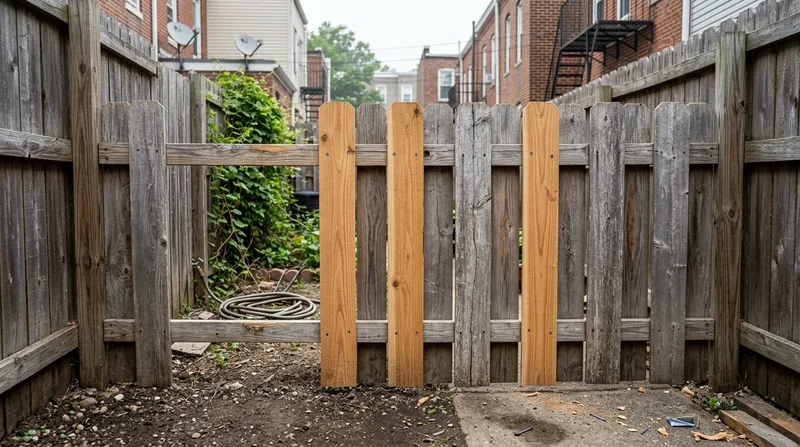




Washington's dense historic neighborhoods, from Capitol Hill's narrow brick rowhouses to the tree-canopied streets of Cleveland Park and the Palisades, depend on fences to define property lines, secure rear alleys, and frame front yards. The freeze-thaw winters here heave fence posts out of the ground, the hot humid summers and saturated red clay rot posts at the ground line, and summer thunderstorms drop limbs across panels. Fence repair in Washington is not cosmetic: a leaning section, broken pickets, sagging alley gate, or storm-damaged panel affects safety, privacy, and property value. We repair leaning sections, broken pickets, sagging alley gates and storm-damaged panels in every fence material. We tell you honestly when a repair will hold and when replacement is the better spend. Most repairs are completed in a single visit, and we work from your existing survey to install on the line you identify.
Why Fence Repair Matters in Washington's Historic and Modern Neighborhoods
Washington's fence stock ranges from wrought iron railings on rowhouse front areaways in Shaw and Bloomingdale to six-foot cedar privacy fences along rear alleys in Capitol Hill, galvanized chain link on side lots, and painted wood picket on detached houses in Spring Valley and Chevy Chase. Each material responds differently to the local climate. Cedar and pressure-treated pine posts set in the dense red clay near the Anacostia River fail faster than posts set in drier ground uphill; freeze-thaw cycles heave posts out of concrete footings; humid summers and saturated soil rot wood at the ground line; and heavy wet snow, derechos, and falling limbs from mature oaks, tulip poplars, and elms damage panels and rails. Catching a repair early, before a leaning fence becomes unstable or a rotted post fails entirely, keeps the fence safe and saves money.
- Freeze-thaw cycles in winter heave posts out of the ground and crack concrete footings, making early spring the peak season for post-related failures.
- Rot at the ground line, driven by humidity and standing water in clay soil, weakens posts and rails and requires post replacement before the fence becomes unsafe.
- Storm damage from summer thunderstorms and occasional derechos breaks pickets, bends rails, and splits panels, and must be addressed quickly to prevent further deterioration.
- Alley gates sag under their own weight and weather exposure, making them hard to close and vulnerable to rust and further damage.
- Wrought iron fences on rowhouse fronts corrode from road salt and humidity, requiring touch-up and protective coating to prevent structural rust.
Early repair keeps your fence functional, safe, and extends its life significantly.
Key info: Washington's building department sets fence height, setback, and material rules that vary across neighborhoods and wards. Some jurisdictions require permits; others do not. HOA architectural standards in master-planned communities frequently govern height, material, and color. Check with your local building department and HOA before you plan a repair or replacement. See our homepage for links to local permit resources.
How We Repair Fences in Washington: Our Process from Assessment to Completion
We start every repair with a free on-site assessment. We walk the fence line, identify the damage, test for rot and structural integrity, and explain whether repair or replacement is the better choice. If repair is sound, we quote the work and schedule at your convenience. Most repairs are completed in one day, and we clean up after ourselves. We work from your existing survey and install on the line you identify. If your fence borders a neighbor's property, we recommend a professional survey to confirm the line, though most Washington homeowners rely on existing deeds or prior surveys.
- Call us at (771) 246-2846 or request a free estimate online to schedule an on-site assessment of your fence damage.
- We inspect the fence, test posts and rails for rot and structural soundness, and photograph the damage for your records.
- We explain the repair or replacement option with honest cost guidance and timeline, and answer questions about permits, HOA rules, and neighbor notification.
- Once you approve, we schedule the work at a time that suits you, often within a few days for urgent storm damage.
- Our crew arrives with the materials and tools needed, completes the repair in one visit in most cases, and removes debris before leaving.
- We provide a receipt and explain any maintenance or monitoring steps to keep your repair holding strong.
This straightforward approach means you know exactly what the problem is, what it will cost, and when the work will be done.
Local example: A rowhouse on Capitol Hill with a six-foot cedar privacy fence along the rear alley had a post rot out at the ground line, causing the fence to lean into the neighbor's lot. We dug out the rotted post, set a new pressure-treated post in concrete, and replaced the damaged rails and pickets. The repair took one day, cost less than half the price of replacing the entire fence, and the fence stands straight again. See our Fence Post Repair & Replacement service for more detail on this common repair.
Repair Methods by Fence Material and Damage Type
Different materials fail in different ways, and the repair method depends on what broke and why. A leaning cedar fence may need only post reset and anti-sag bracing; a vinyl fence with broken pickets needs panel sections replaced; chain link with rust or bent fabric needs mesh patching or replacement; and wrought iron railings need rust treatment and repainting. We carry materials for all common repairs and can often source specialty trim or ornamental hardware the same day.
| Repair Type | Description | Best for |
|---|---|---|
| Post Reset and Concrete | Dig out the heaved or settled post, re-level it, and reset in fresh concrete to restore vertical alignment and stability. | Leaning fences caused by freeze-thaw or settling, especially in dense clay soil. |
| Post Replacement | Remove a rotted or damaged post at the ground line and install a new pressure-treated or cedar post set in concrete. | Posts rotted by moisture and humidity, common in Washington's wet summers and saturated alley clay. |
| Picket and Rail Replacement | Replace broken, split, or rotted individual pickets and rails without removing the entire fence panel or section. | Storm damage, rot, and wear on wood and vinyl fences, often completed in a single day. |
| Chain Link Mesh and Hardware Repair | Patch or replace rusted or torn mesh, repair bent rails, replace tension bands and stretcher bars, and retension the mesh. | Galvanized and powder-coated chain link fences with rust, bent rails, or sagging mesh from age and weather. |
| Gate Hinge and Hardware Repair | Replace rusted or broken hinges, self-closing and self-latching hardware, and latch mechanisms; adjust gate sag and alignment. | Sagging alley gates, rusted iron gates on rowhouse fronts, and gates that no longer close or latch properly. |
| Wrought Iron Rust Treatment and Paint | Remove rust and corrosion, apply rust-inhibiting primer, and repaint wrought iron and steel fences to restore appearance and prevent further corrosion. | Wrought iron railings on rowhouse front areaways corroded by road salt and humidity. |
Fence Repair Cost in Washington: What to Expect
Fence repair costs in Washington range from $450 for a simple single-post reset or a handful of broken pickets, to $2,000 or more for major multi-section repairs, storm damage cleanup, or multiple post replacements. The main factors that move the cost up are the number of posts that need replacement, the extent of rot or storm damage, access to the fence (tight alley spaces cost more than open yards), and the material (cedar and vinyl cost more to repair than treated pine or chain link). A leaning cedar fence in a rear alley may need only post reset and anti-sag bracing, $500 to $800. A six-foot privacy fence with three rotted posts and damaged rails will run $1,500 to $2,200. Storm damage with broken panels and bent rails may be $1,200 to $2,500 depending on how many sections are affected. The best way to know your repair cost is to get a free on-site estimate from us and one or two other local contractors. We respond within 24 hours at (771) 246-2846 and provide a detailed quote with no obligation to book.
See our full pricing page for typical costs by service and material, and to understand what moves the price up or down for your specific fence and damage.
Fence Repair Near Me: What to Look for When Hiring a Contractor in Washington
Washington has no statewide licensing requirement for fence work, so any fence contractor can legally operate in the city. That means your due diligence matters more. Look for a contractor who is fully insured with general liability and workers' compensation cover, can provide a certificate of insurance on request, and has references from recent local jobs. Ask whether they are familiar with Washington's building department permit rules, HOA architectural standards in master-planned communities, and the requirement for a professional 811 utility locate before digging post holes anywhere in the District. Get at least two written estimates, not phone quotes, so you can compare scope, materials, and timeline. Ask how long they have been working locally and whether they do the work themselves or subcontract it out. Check references, especially from jobs done in your neighborhood or on the same material as your fence.
- Confirm the contractor carries general liability and workers' compensation insurance and can provide a certificate of insurance before work begins.
- Ask about their experience with Washington's building code, permit requirements, and HOA restrictions, which vary by neighborhood and ward.
- Request written estimates from at least two contractors so you can compare scope, materials, labor, and timeline side by side.
- Check references from recent jobs in your area or on your fence material, and ask whether the contractor did the work themselves or hired subcontractors.
- Understand that a professional 811 utility locate is required by law before digging any post holes in Washington, and confirm the contractor will arrange this or require you to do so.
- Clarify whether the estimate includes removal and disposal of old materials, and whether any maintenance or warranty is offered after the repair.
A local contractor who knows Washington's neighborhoods, materials, and weather patterns will give you honest guidance on whether to repair or replace, and will complete the job on time and on budget.
Contact us at (771) 246-2846 to request a free estimate, or visit our contact page to submit your details and photos of the damage. We respond within 24 hours and can often schedule urgent storm repairs within a few days.
Fence Repair in Washington: Pricing Guide
| Service | Price | Details |
|---|---|---|
| Single Post Reset or Repair | Starting at $450 | Includes post reset in concrete, leveling, and anti-sag bracing if needed to stabilize a leaning section |
| Post Replacement | Starting at $650 | Includes removal of rotted post, new pressure-treated or cedar post, concrete footing, and rail repair or replacement |
| Picket or Rail Repair | Starting at $300 | Individual broken or rotted pickets and rails replaced; cost increases with number of damaged pieces and fence material type |
| Storm Damage or Multi-Section Repair | On estimate | Requires on-site inspection to assess extent of damage, number of posts and sections affected, and material needs before a firm quote |
| Travel | Included | No separate call-out fee or mileage charge for Washington and surrounding service areas |
| Free Estimate | No charge | Response within 24 hours at (771) 246-2846; on-site assessment with detailed written quote and no obligation to book |
Indicative pricing, the exact cost depends on square footage, finish, and site access. Free personalized estimate within 24h at (771) 246-2846.


