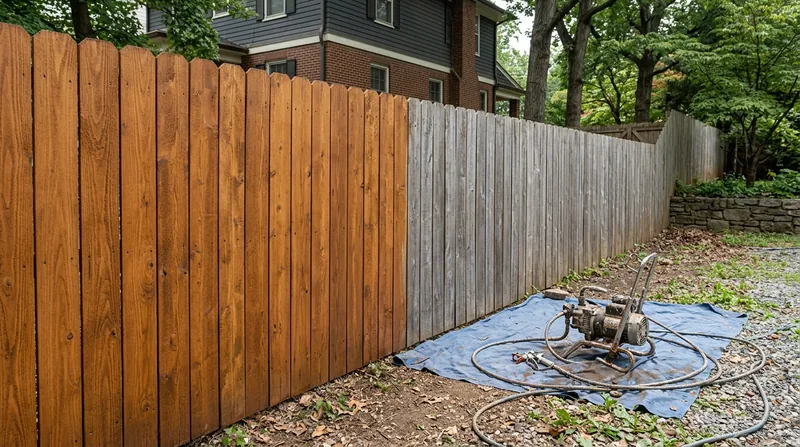




Fence staining in Washington is essential maintenance for cedar privacy fences running along rear alleys and side yards across Capitol Hill, Petworth, Cleveland Park, and the neighborhoods beyond. The humid summers, freeze-thaw winters, and dense shade cast by mature oaks and tulip poplars create ideal conditions for moisture damage, mildew, and wood rot at the base of posts and along the lower rails. A properly sealed and stained fence can double its service life, protecting the grain from the wet red clay soil and the relentless moisture that shortens wood fence life in this climate. We clean, brighten, and seal cedar fences with a hard finish that holds up to DC weather, and we tell you plainly when staining still makes sense and when the wood has deteriorated past restoration.
Why Cedar Fence Staining Matters in Washington's Climate
Washington's climate punishes unprotected wood. The combination of high humidity, seasonal freeze-thaw cycles, and standing water in clay soil creates a perfect storm for fence failure. Cedar and pressure-treated pine posts set in concrete heave upward in winter, opening gaps at the base where water pools and rot begins. Summer humidity keeps the wood perpetually damp, feeding mildew and surface checking. Mature shade trees block the sun that would dry the fence, and the alleys where most privacy fences run offer no air circulation. Without a sealed finish, a fence deteriorates visibly within three to five years.
- Sealed wood resists moisture penetration at the grain, slowing rot at the post base and along lower stringers.
- A stain finish reflects some UV, reducing the checking and graying that expose wood to water damage.
- Brightening removes mildew and oxidation, restoring the natural color before sealing locks in protection.
- Regular maintenance staining every three to four years keeps the wood in service instead of forcing early replacement.
A well-maintained cedar fence outlasts an unprotected one by years, and the cost of staining is a fraction of the cost of replacing rotted posts or entire sections.
Key info: In neighborhoods like Spring Valley and Chevy Chase DC, where large detached homes sit on deep wooded lots, six-foot cedar privacy fences can last 15 to 20 years with regular staining. Without it, posts fail at the ground line in 7 to 10 years, especially where the fence runs north-south in deep shade. The cost to stain every three years is roughly 10 percent of the cost to replace a section of fence.
For more on maintaining your fence, see our fence repair services, where we address damage before it becomes catastrophic.
How We Clean, Brighten, and Seal Your Cedar Fence
Proper fence staining is a three-step process: cleaning removes years of dirt, mildew, and oxidation; brightening opens the grain and restores color; sealing locks in protection. We use commercial-grade pressure washing equipment and brightening agents formulated for cedar, followed by a penetrating or semi-transparent stain that bonds to the wood and flexes with seasonal movement. The work is labor-intensive and requires dry weather and proper ventilation, so timing matters.
- We inspect the fence for soft spots, rot, and structural damage before beginning any cleaning or sealing work.
- Pressure washing removes dirt, mildew, and old stain residue without damaging the wood grain if done at the right pressure and angle.
- Brightener is applied to open the grain, neutralize tannin stains, and restore the natural cedar color for even stain absorption.
- Stain is applied in two coats with proper drying time between, ensuring full penetration and a durable finish that lasts three to four years.
The entire process typically takes two to three days for a standard residential fence, depending on length, condition, and weather.
Example: A six-foot cedar privacy fence in Bloomingdale running 80 linear feet along a rear alley required cleaning, brightening, and sealing after five years of exposure. The fence showed surface mildew and early graying but no rot. Staining restored the color, locked in protection, and reset the maintenance clock for another three to four years. Replacement of that section would have cost three times the staining price.
If your fence needs more than staining, such as fence post repair or replacement, we can address that before or after the staining work.
Fence Staining Methods and Materials
| Approach | Description | Best For |
|---|---|---|
| Penetrating Stain | Oil-based or water-based stain that soaks into the wood grain without forming a film on the surface. Allows the wood to breathe and flex with seasonal movement. | Cedar and pressure-treated pine in DC climates where freeze-thaw stress is high. Requires recoating every 2 to 3 years. |
| Semi-Transparent Stain | Contains more pigment than penetrating stain, providing color and modest UV protection while still allowing wood movement. Offers a satin finish and longer durability. | Fences in mixed sun and shade where you want color retention and moderate protection. Recoating interval 3 to 4 years. |
| Solid or Opaque Stain | Heavy pigment load that covers the wood like paint but retains a matte or satin finish. Hides grain and minor surface defects. Does not flex as much as penetrating stains. | Fences in full sun or where maximum UV protection is needed. Not ideal for freeze-thaw climates because the film can crack and peel. |
| Pressure Washing and Brightening Only | Deep cleaning and wood restoration without color stain. Brightener opens the grain and removes mildew, leaving the fence ready for the owner to stain later or simply maintain with water-based sealer. | Fences in good structural condition where the owner wants to assess the wood condition or delay staining. Common as a maintenance step every 3 to 5 years. |
For most DC residential fences, we recommend a penetrating or semi-transparent stain in a cedar or natural tone that complements the surrounding architecture and landscape. Wood fence installation pages detail material choices; staining extends the life of whatever fence you have.
Fence Staining and Restoration Cost in Washington: What to Expect
Fence staining costs depend on the fence length, current condition, access, and the stain product chosen. A typical residential job starts at $950 for a smaller fence or a single section, and scales upward with length and preparation work. Most homeowners in Washington spend between $1,200 and $2,500 for a complete fence staining job on an 80 to 120 linear foot cedar or pressure-treated privacy fence. The price reflects the labor-intensive nature of cleaning, brightening, and applying two coats of stain with proper drying time.
Factors that affect the final cost include fence length and height, current condition and mildew load, tree shade and access for equipment, whether posts or rails need repair before staining, and the stain product grade. A fence in deep shade with heavy mildew requires more aggressive brightening, adding time and cost. A fence with soft spots or minor rot may need localized post repair, which we can combine with staining. Getting two or three estimates from local contractors allows you to compare pricing and approach.
Staining is significantly less expensive than fence replacement, and when done on schedule every three to four years, it prevents the deterioration that forces replacement. View our full pricing page for additional detail and to request a free on-site estimate.
What to Look for When Hiring a Fence Contractor Near Me in Washington
Choosing the right contractor for fence staining and restoration ensures the work is done correctly and protects your investment. Look for a contractor who inspects the fence before quoting, explains the cleaning and stain process clearly, and provides references from recent residential work. Verify that the contractor carries general liability and workers' compensation insurance, and ask for a certificate of insurance before work begins. In Washington, fence licensing rules vary by jurisdiction, so confirm with your local building department whether a permit or insured contractor is required for staining work in your neighborhood.
- Request a free on-site estimate that includes a walk-through inspection and a written quote with the scope, materials, timeline, and price clearly stated.
- Ask for at least two references from homeowners in Washington or nearby areas who had similar work done in the past two years.
- Confirm that the contractor carries full insurance with a certificate of insurance available on request before work begins.
- Check whether your HOA or deed restrictions set rules on fence color or stain type, and ensure the contractor understands those requirements.
- Clarify the warranty or guarantee on the stain finish, including the expected recoating interval and what happens if the stain fails prematurely.
A professional contractor will be transparent about what can be restored and what needs replacement, and will propose repair before replacement whenever the fence justifies it.
Ready to get started? Contact us for a free estimate at (771) 246-2846, and we will schedule an inspection within 24 hours.
Fence Staining & Restoration in Washington: Pricing Guide
| Service | Price | Details |
|---|---|---|
| Small to medium fence staining | Starting at $950 | Up to 60 linear feet, cleaning, brightening, and two coats of penetrating or semi-transparent stain included |
| Standard residential fence staining | Starting at $1,400 | 60 to 120 linear feet, full cleaning and brightening, two-coat stain application, typical alley or side-yard fence |
| Large fence or heavy restoration | Starting at $1,900 | 120+ linear feet or fences with significant mildew, oxidation, or minor wood damage requiring extra prep and repair |
| Pressure washing and brightening only | Starting at $600 | Deep cleaning and grain restoration without stain application, useful for assessment or when owner plans to stain later |
| Travel and on-site estimate | Free | No charge for inspection, measurement, and written estimate; response within 24 hours at (771) 246-2846 |
Indicative pricing, the exact cost depends on square footage, finish, and site access. Free personalized estimate within 24h at (771) 246-2846.


