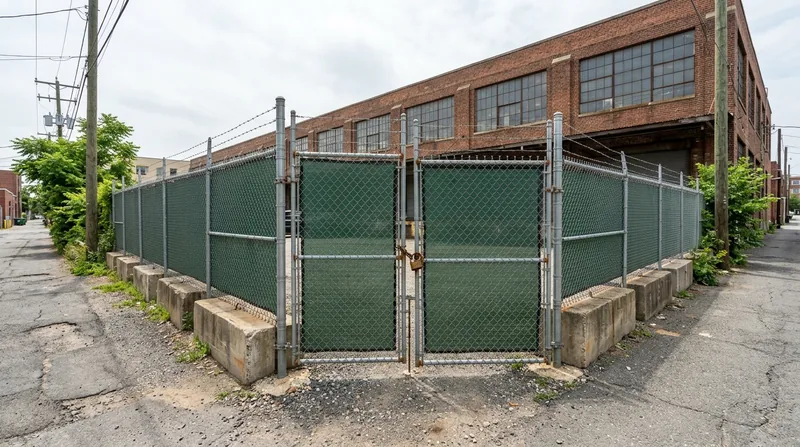




Commercial fence installation in Washington serves builders, general contractors, property managers and site supervisors across all eight wards of the District. Whether you need a temporary construction perimeter, a chain link security enclosure, silt fence for erosion control, or a permanent commercial boundary, Washington Fence installs fast, code-aware layouts that meet DC Department of Energy and Environment setback rules, corner-visibility requirements and material standards. The dense urban fabric of Capitol Hill rowhouses, Bloomingdale garden apartments, Cleveland Park colonials and postwar Anacostia duplexes means most commercial work sits on tight lots with utility lines, mature oaks and maples, and shared alley access. Freeze-thaw winters heave posts, and humid summers rot the base of untreated lumber against the red clay subgrade. We handle the permitting questions, utility locates and staging that keep your jobsite compliant and moving.
Why Commercial and Temporary Fencing Matters on Washington Jobsites
A construction site without proper perimeter control exposes you to liability, trespassing, theft and regulatory fines. Temporary fencing holds the line between your work zone and neighboring properties, keeps pedestrians and vehicles out of active areas, and signals to inspectors and neighbors that the site is managed. Silt fence prevents sediment runoff into storm drains and the Potomac and Anacostia river systems, a requirement under DC stormwater rules. Chain link security fencing protects equipment and materials overnight and during phases when the site is unattended. Commercial-grade installations also reduce insurance claims and keep your GC reputation clean with city agencies and adjacent property owners.
- Temporary construction fence establishes a clear jobsite boundary and controls access during active work.
- Silt fence captures sediment and prevents stormwater pollution into DC waterways and storm systems.
- Chain link security fencing deters theft and vandalism of tools, materials and equipment on unattended sites.
- Proper perimeter fencing reduces liability claims and keeps your project compliant with DC permit conditions.
- Fast installation and removal minimize site downtime and keep your schedule on track.
Each of these approaches protects your jobsite, your crew safety record and your relationship with the city and the community.
Key info: DC Department of Energy and Environment requires erosion and sediment control on most construction sites. Silt fence must be installed before grading begins and maintained throughout the project. We handle the layout, installation and compliance checks so your site inspector has no questions at walk-through.
For more detail on how permits and inspections work, contact the DC Department of Energy and Environment construction permits office.
How We Install Commercial and Temporary Fencing Across Washington
Our process begins with a site visit to understand your jobsite layout, utility lines, terrain and timeline. We call in a DC 811 utility locate to mark underground gas, electric, water and telecom lines before we dig any post holes. We then lay out the fence line to match your permit drawings, set posts on proper spacing with concrete footings where required by code, and stretch fabric or chain link taut to eliminate sag and racking. For temporary installations, we use quick-release hardware and stackable panels so removal is clean and leaves no debris or post stumps behind. For silt fence, we key the geotextile fabric into the soil along the uphill perimeter and stake it securely so it holds sediment and survives wind and heavy rain.
- Request a free site visit and we assess access, utilities, terrain and your permit requirements.
- We order a DC 811 utility locate and wait for clearance before any digging begins.
- Posts are set on proper spacing with concrete footings or tamped earth, depending on code and soil conditions.
- Chain link or temporary fabric is stretched taut and secured to eliminate sag, racking and wind movement.
- We remove all temporary installations cleanly and haul debris off-site when your project phase is complete.
This step-by-step approach keeps your site safe, your permit conditions met and your crew focused on the work ahead.
Example: A Capitol Hill renovation on a narrow 25-foot-wide lot required temporary fencing along the alley boundary and silt fence at the rear to protect the Anacostia tributary that runs two blocks away. We installed 180 linear feet of chain link with self-closing gates, keyed silt fence into the clay subgrade and coordinated with the DC Department of Energy and Environment inspector. The site passed stormwater compliance on first walk-through and the general contractor finished on schedule without fines or neighbor complaints.
For details on our other fencing services, see our page on chain link fence installation and fence removal and replacement.
Commercial Fencing Methods and Materials
| Approach | Description | Best for |
|---|---|---|
| Chain Link Security Fencing | Galvanized or vinyl-coated steel mesh in 6-foot height with tension bands and stretcher bar hardware. Posts set in concrete on 6-foot centers. Self-closing self-latching gates for equipment access. | Equipment storage, material staging, overnight security and perimeter control on active construction sites. |
| Temporary Construction Fence | Lightweight steel or plastic-coated panels, 6 feet tall, with quick-release clamps and removable posts. Orange warning fabric and reflective tape for visibility. Stackable for easy transport and storage. | Short-term jobsite perimeter, pedestrian and vehicle exclusion, and compliance signage during active demolition or construction phases. |
| Silt Fence Installation | Geotextile fabric keyed 6 inches into the soil and staked every 4 feet along the uphill perimeter. Prevents sediment and soil runoff into storm drains and waterways. Maintained and replaced as needed throughout the project. | Erosion and sediment control required by DC Department of Energy and Environment on all grading and excavation work. |
| Anti-Sag Bracing and Cantilever Gates | Heavy-duty diagonal bracing on tall or wide chain link runs. Cantilever or V-track gates for wide vehicle access without in-ground tracks that can trip or collect debris. | High-traffic sites, wide gate openings and long fence runs that must remain taut and sag-free under wind and weather. |
Commercial and Temporary Fencing Cost in Washington: What to Expect
The cost of commercial fencing in Washington depends on material, height, linear footage, site access and whether the installation is temporary or permanent. Chain link security fencing typically costs more per linear foot than temporary construction panels because it uses heavier gauge mesh, concrete footings and durable hardware rated for years of use. Temporary fencing is faster to install and remove, which can lower labor cost but may be rented rather than purchased if your project is short. Silt fence is inexpensive but requires ongoing maintenance and replacement as sediment accumulates. Access to the site, utility locate requirements, soil conditions and whether we need to remove or abandon existing posts all affect the final price.
We provide a free site visit and written estimate within 24 hours. Most commercial jobs in Washington run from a few hundred linear feet on a tight urban lot to 500 or more feet on a larger development site. Call us at (771) 246-2846 to schedule your walk-through and get a realistic number for your jobsite. For detailed pricing on our full range of services, visit our pricing page.
The best approach is to get 2 or 3 estimates from contractors who understand DC permit requirements and can show you examples of similar work. A low bid that skips utility locates or proper post depth will cost you far more in fines, injuries or project delays than a thorough installation done right the first time.
What to Look for When Hiring a Commercial Fence Contractor Near Washington
Hiring the right contractor for your jobsite fence is as important as choosing your GC. Look for a contractor who is fully insured with general liability and workers' compensation coverage and can provide a certificate of insurance on request. Fence work in Washington is not licensed at the state level, so there is no contractor license to verify. However, the contractor should be familiar with DC Department of Energy and Environment stormwater rules, DC 811 utility locate requirements and local setback and height standards that vary by ward and neighborhood. Ask for references from other general contractors or property managers and call them to confirm the work was completed on time, to code and without disputes.
If your site includes protected or heritage trees, confirm that the contractor understands DC tree preservation rules and can work around root zones without damage. If your property is in an HOA or historic district, check whether fence height, material or color are restricted and get written approval before installation begins. Many disputes arise because the contractor and owner did not agree on what the permit allows. A good contractor will walk the site with you, show you the permit drawings, explain what will and will not be done, and give you a clear timeline and price before any work starts.
- Verify that the contractor carries general liability and workers' compensation insurance and can provide proof on request.
- Ask for references from other GCs or property managers who have used the contractor for commercial or temporary fencing.
- Confirm that the contractor understands DC 811 utility locate requirements and will call before digging any post holes.
- Check whether your site is in a historic district or HOA and confirm the contractor knows the height, material and color rules that apply.
- Get a written estimate that clearly describes what will be installed, the timeline, the price and what happens if the site conditions change.
- Ask whether the contractor has experience with silt fence, erosion control and stormwater compliance if your site includes grading or excavation.
Taking time to choose the right contractor upfront saves money, headaches and delays when the project is underway.
Ready to move forward? Contact us for a free estimate and we will walk your site and give you a realistic price within 24 hours.
Commercial & Temporary Fencing in Washington: Pricing Guide
| Service | Price | Details |
|---|---|---|
| Temporary Construction Fence | Free site quote | Linear footage, height, duration of use and site access determine the final cost for temporary panels and quick-release hardware. |
| Chain Link Security Fencing | Starting at $45 per linear foot | Includes 6-foot galvanized or vinyl-coated mesh, posts set in concrete on 6-foot centers, tension hardware and self-closing gates. |
| Silt Fence Installation and Maintenance | Starting at $8 per linear foot | Geotextile fabric keyed into soil and staked every 4 feet. Maintenance and replacement during the project included in estimate. |
| Utility Locate and Site Prep | Included | DC 811 utility locate, site layout, corner marking and permit review included in all commercial fencing estimates at no extra charge. |
| Site Visit and Written Estimate | Free | Walk-through, photos, measurements and detailed written quote delivered within 24 hours at (771) 246-2846, no obligation to book. |
Indicative pricing, the exact cost depends on square footage, finish, and site access. Free personalized estimate within 24h at (771) 246-2846.


