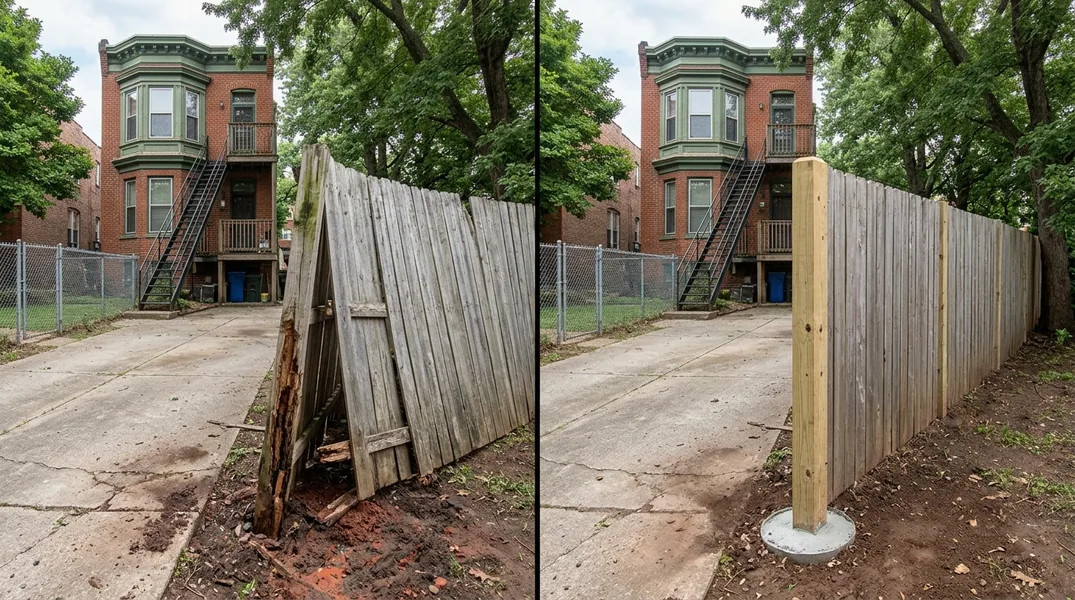
Understanding Property Lines and Fence Responsibility in Washington
One of the most common questions rowhouse owners ask in Washington is simple but important: who actually pays for a fence that sits on the property line between two homes? The answer isn't always straightforward, and it depends on several factors including local law, the fence's current condition, and whether your neighbor agrees to share costs. In rowhouse communities like Capitol Hill (Washington), where properties sit close together, this question comes up frequently.
In DC, the concept of a "partition fence" or "boundary fence" is central to understanding who bears the financial responsibility. Generally speaking, if a fence sits directly on the property line dividing two parcels, both property owners have an equal right to use it and, theoretically, an equal obligation to maintain it. However, this doesn't automatically mean both owners must split the cost of a new fence. The situation becomes more complex when one neighbor wants a new fence and the other does not, or when an existing fence needs replacement.
The Good Neighbor Fence Act and DC Law
Washington DC does not have a specific statute called the "Good Neighbor Fence Act," but many states do have similar laws that govern fence disputes. Instead, DC relies on common law principles and property regulations to determine fence responsibility. The key principle is that a property owner can build a fence on their own property, but when that fence sits on the boundary line, it becomes a shared responsibility in the eyes of the law, even if only one owner initiated the project.
What this means in practical terms is that if you want to build a new Wood & Privacy Fence Installation on the property line, you generally cannot force your neighbor to pay for it. However, once the fence is built and serves both properties, your neighbor may be liable for a proportional share of maintenance and repair costs going forward. This is where many disputes arise. Your neighbor might argue they never agreed to the fence in the first place and therefore shouldn't contribute to its upkeep. To avoid this conflict, it's wise to have a written agreement before construction begins.
When Your Neighbor Wants to Share the Cost
If both you and your neighbor agree that a new fence is needed and want to split the cost, the process becomes much simpler and fairer. In this scenario, you should document your agreement in writing, even if it's just a simple email or letter. Specify which type of fence you're installing, the total estimated pricing, each party's share, and when payment is due. This protects both of you and prevents misunderstandings later.
When neighbors cooperate on a fence project, you can explore different materials and styles together. Some homeowners in Washington prefer Wood & Privacy Fence Installation for its classic appearance and privacy benefits, while others choose Vinyl & PVC Fence Installation for its lower maintenance requirements. Having your neighbor's input ensures the final result meets both households' needs and aesthetic preferences. When both parties are invested in the project, the fence typically lasts longer because both owners are motivated to maintain it properly.
What Happens When Only One Neighbor Wants a Fence
This is where fence disputes often originate. Let's say you want to build a privacy fence but your neighbor doesn't want to pay for it or doesn't want a fence at all. In DC, you have the legal right to build a fence on your own property line at your own expense. Your neighbor cannot prevent you from doing so, provided the fence complies with local zoning regulations and setback requirements. However, once that fence is constructed, the legal status becomes murkier regarding future maintenance obligations.
Some DC courts have held that if a neighbor benefits from a fence (for example, it provides privacy or marks a clear boundary), they may be responsible for contributing to its repair or replacement when the time comes, even if they didn't pay for the original installation. This is called the "benefit principle." To protect yourself and avoid future disputes, consider getting a written statement from your neighbor acknowledging that you built the fence at your sole expense and that they are not obligated to contribute to its initial cost. If they later benefit from the fence and it needs major repairs, having this documentation can clarify the situation.
Wood & Privacy Fence Installation Near Me: When to Call a Professional
Before diving into a fence project, whether it's a solo effort or a shared one, it's essential to consult with a professional fence installer in Washington. A qualified contractor can help you navigate property line issues, ensure your fence meets DC building codes, and provide accurate cost estimates. Washington Fence specializes in helping homeowners and neighbors work through these exact scenarios. Our team can assess your property, explain your legal options, and recommend the best fence type for your situation.
Professional installation also protects you legally. When an insured contractor builds your fence, they verify that the structure complies with DC regulations and is positioned correctly in relation to your property line. This documentation can be invaluable if a dispute ever arises. Whether you choose Wood & Privacy Fence Installation, Vinyl & PVC Fence Installation, Chain Link Fence Installation, or Aluminum & Ornamental Iron Fencing, a professional team ensures the job is done right. Contact Washington Fence at (771) 246-2846 to discuss your project and get a free estimate.
Practical Steps to Avoid Fence Disputes with Your Neighbor
The best way to handle fence questions is to address them proactively before construction begins. Start by having a friendly conversation with your neighbor about whether a fence is needed and what both parties want from it. Be clear about your intentions and listen to their concerns. Many disputes stem from poor communication rather than genuine legal disagreements. If you and your neighbor are interested in sharing costs, put your agreement in writing and include details about materials, labor, timeline, and payment terms.
Before any work begins, both parties should also review DC's zoning regulations and any homeowners association rules that might apply. Some neighborhoods in Bloomingdale (Washington) and other parts of the city have specific fence height restrictions or material requirements. A professional fence company can provide this information and ensure your project complies with all local rules. If disagreements persist, consider mediation through a local dispute resolution service before resorting to legal action. Most fence disputes can be resolved through open dialogue and professional guidance, saving both time and money for everyone involved.
Looking for a professional fence contractor in Washington? Washington Fence responds fast for all your fence needs.
Get a Free Quote