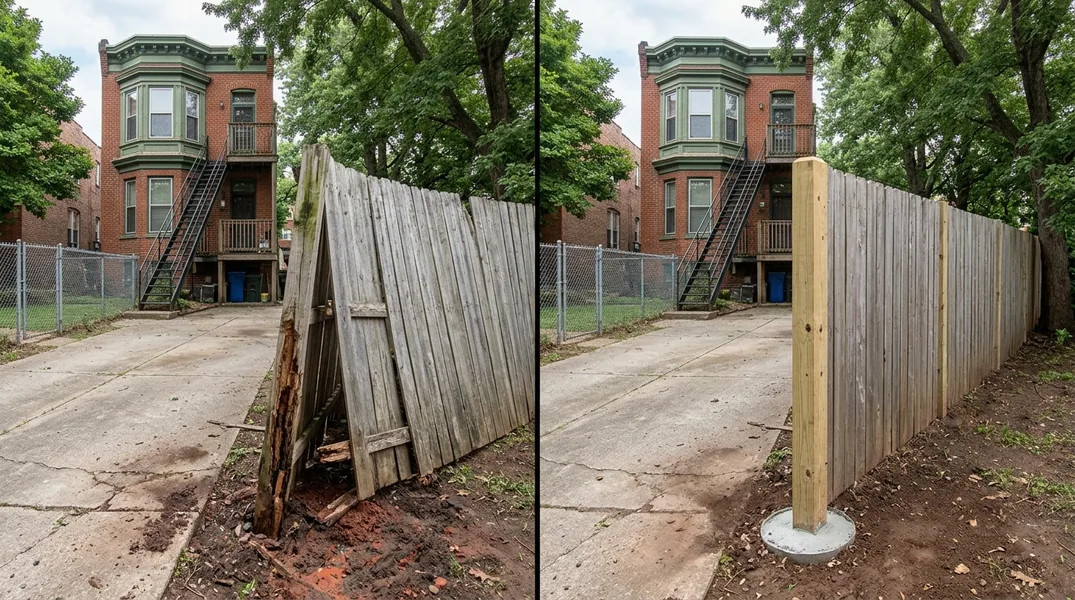
Why DC Fences Lean: Understanding the Local Soil and Climate
If you own a home in Washington, you've probably noticed that many older fences have a noticeable tilt. This isn't just a cosmetic issue or a sign of poor installation. The leaning fence problem is deeply rooted in the unique combination of soil composition and seasonal weather patterns that define the DC region.
The culprit is largely the red clay soil that dominates much of Washington's landscape. Red clay expands when it absorbs moisture and contracts as it dries out. This constant cycle of expansion and contraction creates significant pressure on fence posts, gradually pushing them out of their original position. Add to this the region's notorious freeze-thaw winters, where soil freezes solid and then thaws repeatedly throughout the season, and you have the perfect recipe for structural movement. This phenomenon, known as frost heave, literally lifts and shifts the ground beneath your fence posts, destabilizing the entire structure over time.
Frost Heave Fence Posts: How Winter Weakens Your Fence
Frost heave is one of the most destructive forces acting on fences in colder climates, and DC experiences it regularly. When water in the soil freezes, it expands, creating tremendous upward pressure on anything embedded in the ground. For fence posts, this means they get pushed upward during winter months. When spring arrives and the ground thaws, the posts don't always settle back into their original positions. Year after year, this cycle causes posts to shift higher and higher, eventually creating visible gaps and tilting the entire fence structure.
The damage compounds when you consider that frost heave also affects the integrity of the post itself. As posts move up and down repeatedly, the concrete footings crack, soil becomes compacted unevenly, and the post loses its secure foundation. Even a fence that was installed correctly initially will eventually succumb to these forces if the underlying posts aren't designed or maintained to withstand them. This is why homeowners in Capitol Hill (Washington) and other DC neighborhoods frequently face leaning fence problems within 7 to 15 years of installation.
Rotted Fence Post Repair: Addressing the Hidden Problem
While soil movement is a primary cause of leaning fences, rotted fence posts are equally to blame. Wood is naturally susceptible to rot when exposed to moisture, and DC's humid summers combined with spring snowmelt create ideal conditions for decay. A post that appears solid on the surface may be soft and compromised deep in the wood, especially below the soil line where moisture accumulates and air circulation is minimal.
Rotted fence post repair is essential because a weakened post cannot support the weight of fence panels or resist the forces of frost heave and soil movement. As the wood deteriorates, it loses its structural capacity, and the post begins to lean or even collapse. The problem is often invisible until significant damage has occurred. By the time a homeowner notices a tilt, the rot may have already compromised 50 percent or more of the post's integrity. This is why professional inspection is critical. A trained eye can identify soft spots, discoloration, and other warning signs of rot before the fence becomes dangerous or requires complete replacement.
Leaning Fence Repair: When to DIY and When to Call a Professional
A minor tilt might seem like something you could fix yourself with a few tools and some effort. However, leaning fence repair is rarely a simple straightening job. The underlying causes (frost heave, rotted posts, soil instability) require professional assessment and targeted solutions. Attempting to simply push a fence back into place without addressing the root cause will result in it leaning again within weeks or months.
Professional Wood & Privacy Fence Installation experts have the knowledge to diagnose what's causing your fence to lean and recommend the appropriate fix. This might involve replacing individual rotted posts, installing posts deeper or with concrete footings designed to resist frost heave, or in some cases, reinforcing the fence with additional bracing. For homeowners in Bloomingdale (Washington) and surrounding areas, calling Washington Fence at (771) 246-2846 can save you time, money, and frustration in the long run. A professional can provide a free estimate that outlines exactly what needs to be done and the associated costs.
Fence Post Repair Solutions: Modern Approaches and Materials
Today's fence post repair solutions go beyond simply replacing wood with more wood. Contractors now have access to advanced materials and techniques specifically designed to withstand DC's challenging climate. One effective approach involves installing posts deeper than the frost line (typically 3 to 4 feet in the DC region) and using concrete footings that extend below the frost line to prevent heave. Some professionals also use composite or pressure-treated posts that resist rot far better than standard wood.
Another solution is to reinforce existing posts by installing steel posts alongside them or wrapping the base with protective barriers that prevent moisture from entering the wood. For fences that are only slightly leaning and whose posts aren't severely compromised, sistering (attaching a new post alongside the existing one) can restore stability without the expense of full replacement. The best approach depends on the specific condition of your fence, the severity of the lean, and your budget. Washington Fence can assess your situation and recommend the most cost-effective solution tailored to your home's needs.
Preventing Future Leaning: Maintenance Tips and Installation Best Practices
Prevention is always preferable to repair. If you're planning new Wood & Privacy Fence Installation, ensure that your contractor installs posts at the proper depth and uses concrete footings that extend below the frost line. The initial investment in quality installation pays dividends in years of stable, attractive fencing. Additionally, proper drainage around your fence line helps reduce moisture accumulation in the soil, which minimizes both frost heave and rot.
Regular maintenance also extends the life of your fence and catches problems early. Inspect your fence annually, looking for signs of leaning, soft spots in the wood, or cracked concrete footings. Keep gutters and downspouts directed away from your fence line to prevent water from pooling near posts. If you notice any tilt or damage, address it promptly rather than waiting for the problem to worsen. For homeowners in Shaw (Washington) and elsewhere, a simple annual inspection can mean the difference between a minor repair and a costly replacement. Washington Fence offers professional assessments and can discuss pricing for both preventive maintenance and repair work.
Looking for a professional fence contractor in Washington? Washington Fence responds fast for all your fence needs.
Get a Free Quote