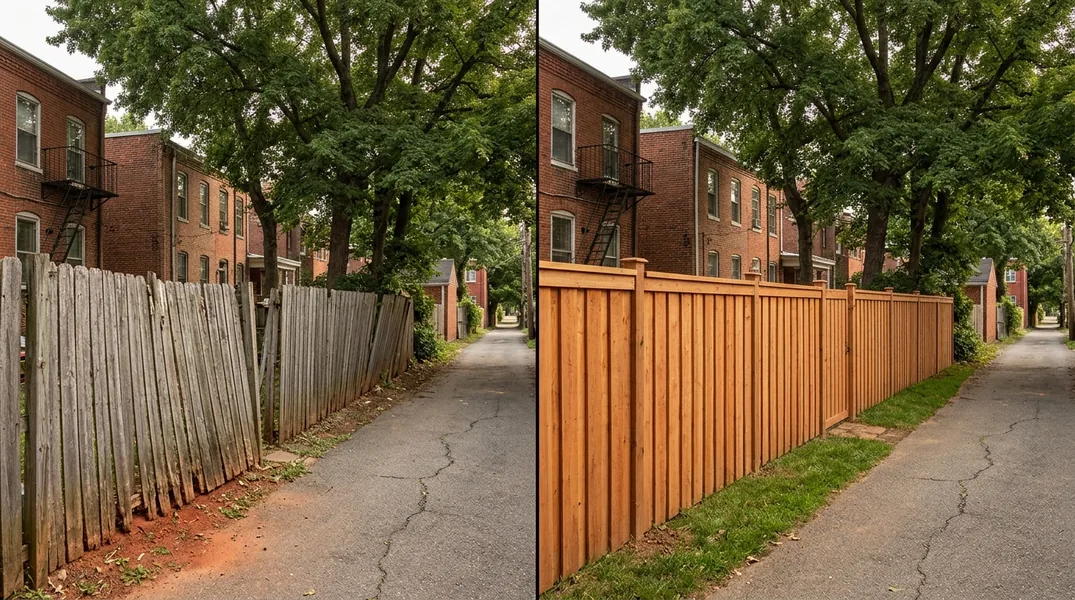
Understanding DC's Climate Challenge for Fencing
Washington's climate presents a unique set of challenges for fence materials. The region experiences significant humidity year-round, with summers bringing moisture-laden air and winters delivering the notorious freeze-thaw cycle that can wreak havoc on outdoor structures. If you're planning a fence installation in Washington, understanding how your chosen material will perform through these seasonal swings is critical to making a smart investment.
The freeze-thaw cycle is particularly punishing. When water penetrates a material and then freezes, it expands. This repeated expansion and contraction can cause cracking, warping, and structural failure over time. Combined with the region's high humidity and occasional ice storms, your fence faces a relentless test. This is why so many homeowners in Capitol Hill (Washington) and surrounding neighborhoods find themselves comparing wood and vinyl as their primary options. Each material responds differently to these environmental stressors, and the differences matter more than you might think.
Wood Fencing: Classic Appeal with Real Maintenance Demands
Wood & Privacy Fence Installation remains popular in Washington for good reason. Wood offers aesthetic warmth, natural beauty, and the ability to customize your fence to match your home's architecture. A well-designed wooden privacy fence can increase your property's curb appeal and provide genuine seclusion from neighbors. Many homeowners also appreciate that wood is a renewable resource and can be recycled or composted at the end of its life.
However, wood demands respect in DC's climate. The humidity causes wood to absorb moisture, which leads to swelling, warping, and cupping. The freeze-thaw cycle can split boards as ice forms within the wood grain. Wood is also vulnerable to rot, mold, and mildew, especially in shaded areas that don't dry quickly after rain. Termites and other wood-boring insects are a real concern in the Mid-Atlantic region. To protect your investment, you'll need to seal or stain your wood fence every 2 to 3 years, pressure wash it annually, and address any damaged boards promptly. This ongoing maintenance is not optional if you want your fence to last 15 to 20 years.
Vinyl Fencing: Low Maintenance, But Not Maintenance-Free
Vinyl & PVC Fence Installation has gained significant traction over the past two decades, and for Washington homeowners, the appeal is understandable. Vinyl doesn't absorb water, so it won't rot, swell, or warp the way wood does. It won't splinter, crack from freeze-thaw cycles, or attract termites. Vinyl fencing is often marketed as maintenance-free, which is partially true. You won't need to stain, seal, or paint it. A simple rinse with a garden hose or occasional pressure washing keeps it looking clean.
The reality is more nuanced. While vinyl is highly resistant to the environmental stressors that plague wood, it's not completely immune to DC's climate challenges. Vinyl can become brittle in extreme cold, and in rare cases, expansion and contraction from temperature swings can cause panels to shift slightly. Vinyl also fades over time when exposed to intense UV radiation, though modern vinyl formulations resist this better than older versions. Additionally, vinyl can be damaged by impact, and repairs often mean replacing entire panels rather than fixing a single board. Despite these minor caveats, vinyl requires far less hands-on maintenance than wood, making it an attractive choice for busy homeowners.
Wood vs Vinyl Fence Cost in Washington: What to Budget
When comparing pricing for wood versus vinyl, the initial installation cost is often the deciding factor for many homeowners. Wood fencing typically costs less upfront. A basic wooden privacy fence in Washington might run between $20 and $35 per linear foot for materials and installation, depending on wood quality and design complexity. This lower entry cost appeals to budget-conscious homeowners and those installing longer fence lines.
Vinyl fencing generally costs more initially, typically ranging from $30 to $50 per linear foot or higher for quality materials and professional installation. This 30 to 50 percent premium reflects the material's durability and lower lifetime maintenance requirements. However, when you factor in the total cost of ownership over 20 years, the equation shifts. Wood requires regular sealing, staining, and repairs. A homeowner might spend $500 to $1,000 every few years on maintenance alone. Vinyl requires occasional cleaning and rare repairs, potentially saving thousands over the fence's lifetime. For most Washington homeowners, vinyl's lower long-term cost often justifies the higher upfront investment. To understand what your specific project will cost, contact Washington Fence for a free estimate tailored to your property and preferences.
Durability and Lifespan in DC's Humid, Freeze-Thaw Climate
Durability is where climate really matters. A wooden fence in Washington typically lasts 15 to 20 years with diligent maintenance, or as few as 8 to 12 years if neglected. The humidity accelerates rot, the freeze-thaw cycle causes structural damage, and wood-boring pests take their toll. Even pressure-treated lumber, which resists rot better than untreated wood, isn't immune to these challenges in our region. You might extend a wood fence's life through exceptional care, but you're fighting against the climate the entire time.
Vinyl fencing, by contrast, typically lasts 25 to 30 years or longer in Washington's climate. Because it doesn't absorb water, rot is not a concern. The freeze-thaw cycle doesn't damage vinyl the way it damages wood. Pests don't eat vinyl. The material's main enemy is UV fading and impact damage, both of which are manageable. This extended lifespan means you're less likely to need a complete fence replacement during your time in your home, which appeals to many homeowners planning to stay put for years. In neighborhoods like Bloomingdale (Washington), where properties often change hands, a durable vinyl fence can be a selling point.
Aesthetics, Environmental Impact, and Your Final Decision
Beauty and environmental considerations matter too. Wood offers a natural, warm aesthetic that many homeowners prefer. It can be stained in various colors and styles, from rustic to contemporary. Vinyl comes in wood-grain finishes that mimic real wood, along with solid colors, though some homeowners feel vinyl looks less authentic. If aesthetics are your primary concern, wood may edge out vinyl. Additionally, wood is a renewable resource, and at the end of its life, it can decompose naturally or be recycled, appealing to environmentally conscious homeowners.
The environmental case for vinyl is more complex. Vinyl production involves petroleum products and chemicals, which carries an environmental cost. However, vinyl's 25 to 30 year lifespan means you're replacing it far less frequently than wood, which reduces the overall environmental impact over time. Recycling options for vinyl are improving but remain limited in many areas. If environmental impact is your primary concern, wood may be the better choice, but the math isn't as straightforward as it initially appears. Ultimately, the best fence material for your Washington home depends on your priorities. If you value low maintenance and durability in our humid climate, vinyl wins. If you prioritize upfront cost and natural aesthetics, wood is compelling. Washington Fence can help you weigh these factors for your specific situation. Call (771) 246-2846 or reach out online to discuss your fencing project with our local experts who understand DC's unique climate challenges.
Looking for a professional fence contractor in Washington? Washington Fence responds fast for all your fence needs.
Get a Free Quote